 how-to
7 Steps to Find Accurate Shirt Sizing Online
Last Updated: October 28, 2026
Quick Summary
To find accurate shirt sizing online, measure your chest, shoulder width, sleeve length, and shirt length with a soft tape measure, then compare those numbers to the size chart. Shirt sizing works best when you also lay a favorite shirt flat and match its garment measurements to the chart, since charts list garment measurements rather than body measurements.
- Online fashion returns run at 24.4%, and wrong sizing drives most of them.
- Measure over a thin shirt, keep the tape snug but not tight, and write down exact numbers including half inches.
- A chart's chest width of 21 inches is a flat measurement, so double it to get 42 inches of garment circumference.
- Ease is garment circumference minus body circumference; positive ease means room to move.
- A 2025 study on CNN-based shirt size estimation hit 70% accuracy and blamed misses on imprecise body measurements.
Table of Contents
- Why Online Shirt Sizing Goes Wrong So Often
- What You'll Need Before You Measure
- How to Measure Shirt Size on Your Own Body
- How to Measure a Shirt That Fits and Compare It to the Chart
- Reading a T-Shirt Size Chart the Right Way
- When to Use a Shirt Size Calculator (and When Not To)
- Fabric, Shrinkage, and Fit Preferences That Change Your Size
- Ordering Matching Family Shirts Without Guesswork
- Frequently Asked Questions
Why Online Shirt Sizing Goes Wrong So Often
Online fashion returns run at 24.4%, and wrong sizing drives most of them, according to Genlook's comparison of virtual sizing tools. That single number explains why so many shoppers dread the size dropdown. You cannot touch the fabric, hold the shirt up to your shoulders, or try a second size without a shipping label.
BaileysTeesAndMore offers graphic tees and long-sleeve shirts for the whole family. Shirt sizing is the practice of matching your body measurements to a specific garment's measurements, not to a letter on a label. The letter is a guess. The tape measure is not.
Below are steps for measuring with one soft tape measure.
What You'll Need Before You Measure
Gather three things before you start: a flexible tape measure, a helper, and a shirt you already love the fit of. That's it. No apps, no scanners, no guesswork about your "true" size.
- A soft tape measure. A stiff metal tape from the garage will not follow your curves.
- A second person. Shoulder width is nearly impossible to measure alone.
- A favorite shirt. Lay it flat and measure it later.
- A mirror. Useful for checking that the tape sits level.
One quick note on accuracy: a 2025 study in Engineering Proceedings on CNN-based shirt size estimation hit 70% accuracy and blamed misses on imprecise body measurements. Translation? Even the machines struggle when the input is sloppy. Your tape measure is the input.
How to Measure Shirt Size on Your Own Body
Stand relaxed with your arms at your sides. Measure over a thin shirt, not a bulky sweatshirt, and keep the tape snug but not tight. Write each number down as you go. The goal is a repeatable process.
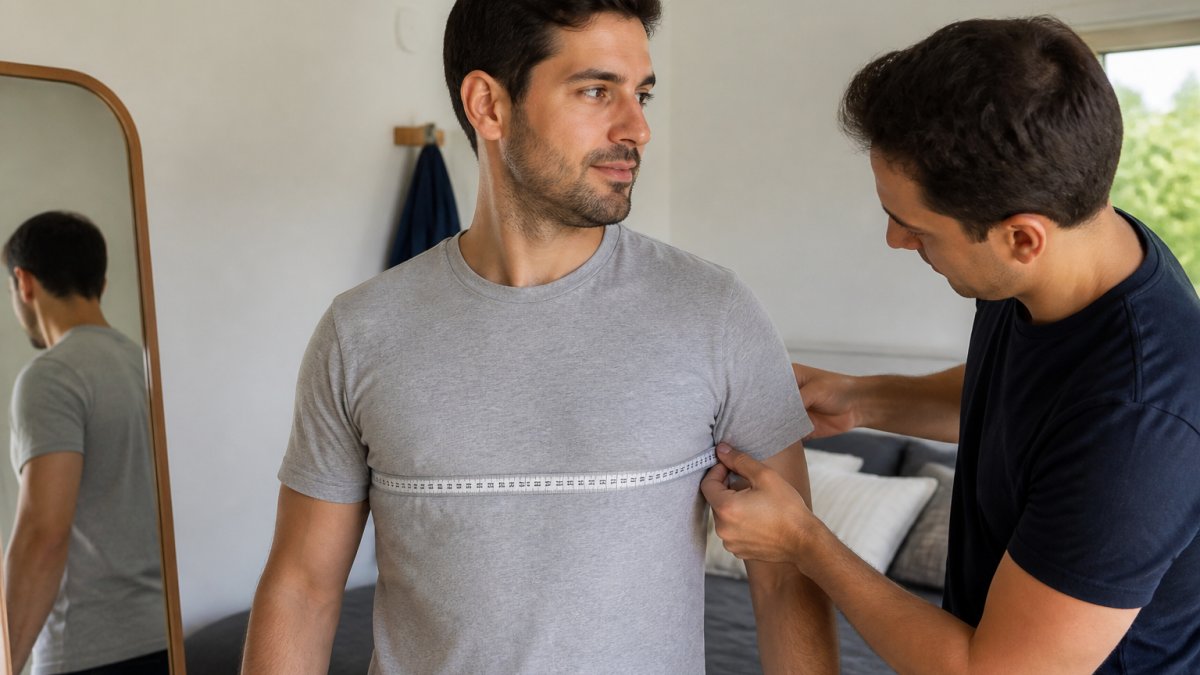
The Five-Step Measuring Sequence
Run the steps in this order so each measurement is taken from a stable reference point.
- Set your posture. Stand tall, feet hip-width apart, arms down, and breathe normally. Do not puff your chest or suck in your stomach, measure the body you actually have on an average day.
- Chest or bust. Wrap the tape around the fullest part of your chest, under your arms, and keep it level across your back. Check in the mirror that the tape is parallel to the floor in front and back. Record the number at the end of a normal exhale.
- Shoulder width. Have a helper measure straight across the back from one shoulder seam point to the other, the bony point where a sleeve seam would sit, not the outer edge of the arm. Use a second person or a shirt you already own as a proxy.
- Sleeve length. Start at the shoulder seam point and measure down the outside of a slightly bent arm to where you want the sleeve to end, wrist bone for long sleeve, mid-forearm for three-quarter, mid-bicep for short sleeve. Keep the arm relaxed; a locked-straight arm adds length you will not have when wearing the shirt.
- Shirt length and neck (if applicable). Measure from the base of the neck down to your preferred hem. For a button-down, add a neck measurement around the base of your throat with one finger of room.
Common Measuring Errors and How to Catch Them
Most bad measurements come from four mistakes. Check for each before you trust a number.
- Tape not level. A tape that dips in back reads short. Have a helper sight the tape against a mirror or door frame.
- Measuring over bulky clothing. A hoodie can add an inch or more to your chest. Measure over a thin tee.
- Pulling the tape tight. Snug, not tight. If the tape leaves a mark, it is too tight.
- Rounding or guessing. Write the exact number, including the half inch. Rounding early compounds when you compare to a size chart.
Verify With a Shirt You Already Own
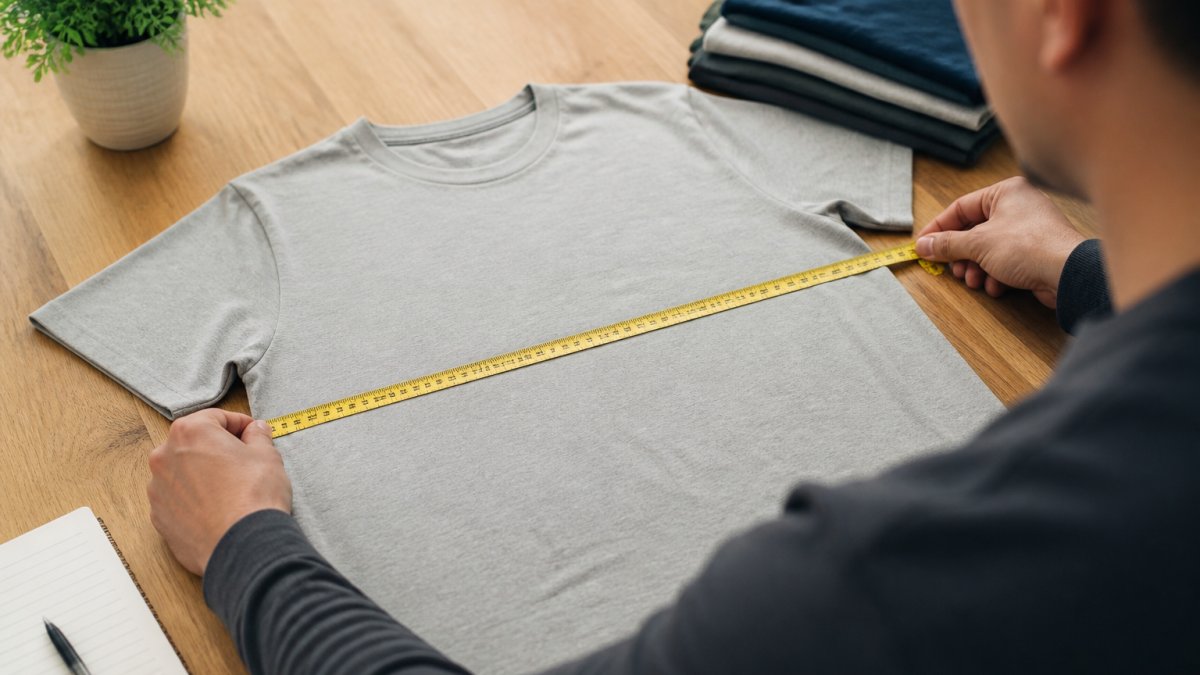
A shirt that already fits can be used as a reference. Lay it flat and measure its chest width armpit to armpit, then double it. Compare that garment circumference to your body chest measurement. The difference is the ease built into that shirt. If your body measurement plus that ease matches the shirt you love, compare those measurements when shopping.
One quick note on accuracy: a 2025 study in Engineering Proceedings on CNN-based shirt size estimation hit 70% accuracy and blamed misses on imprecise body measurements. Translation? Even the machines struggle when the input is sloppy. Your tape measure is the input.
Run these five measurements in order so each one starts from a stable reference point.
| Step | What to do | Note |
|---|---|---|
| Set your posture | Stand tall, feet hip-width, arms down, breathe normally | Do not puff chest or suck in stomach |
| Chest or bust | Tape around fullest part of chest, under arms, level across back | Record at end of a normal exhale |
| Shoulder width | Helper measures seam point to seam point across the back | Bony point where a sleeve seam would sit |
| Sleeve length | Shoulder seam down outside of slightly bent arm | Wrist bone for long sleeve, mid-bicep for short |
| Shirt length and neck | Base of neck down to preferred hem | For button-down, add neck with one finger of room |
How to Measure a Shirt That Fits and Compare It to the Chart
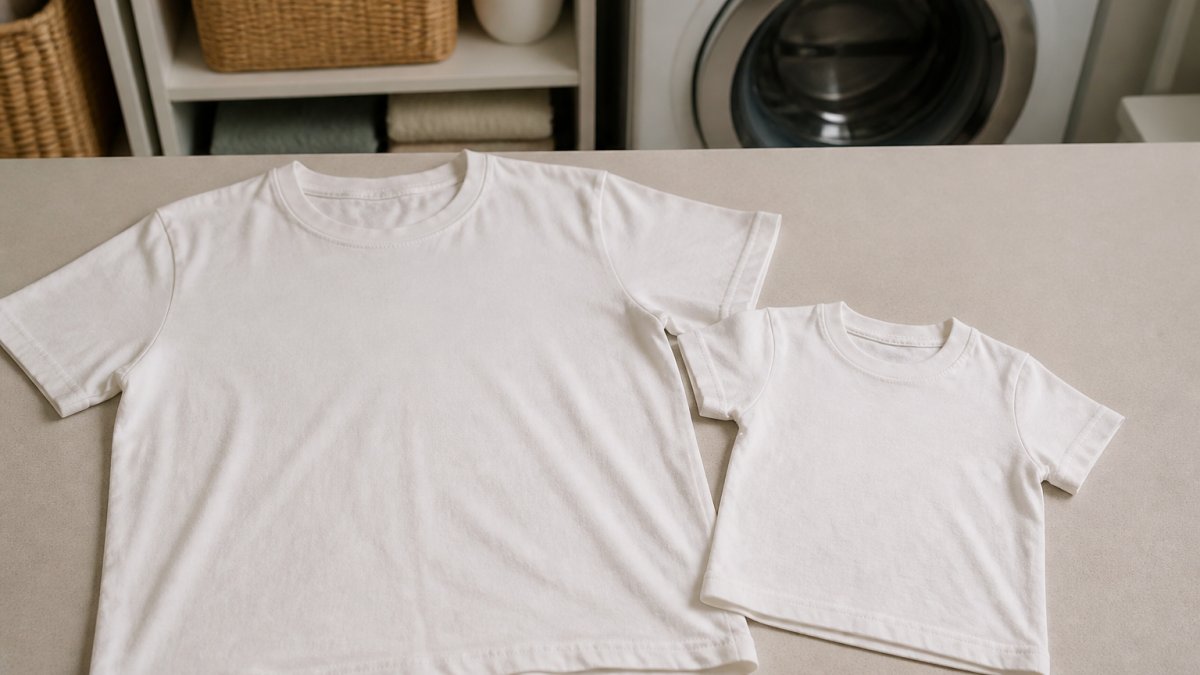
Here is the step most shoppers skip, and it changes everything. Lay your best-fitting shirt flat on a table and measure the garment itself.
- Chest width: Measure straight across from armpit to armpit, then double it.
- Body length: Measure from the collar seam down to the hem.
- Sleeve: Measure from the shoulder seam to the cuff.
- Shoulder: Measure seam to seam across the top.
Now compare those numbers to the size chart. If the chart lists a "chest width" of 21 inches, that is a flat measurement, not a body measurement. Double it to get 42 inches of garment circumference.
This flat-lay method can help you compare a shirt's measurements before you buy.
Reading a T-Shirt Size Chart the Right Way
A size chart is a table of garment measurements, not body measurements. That distinction trips up almost everyone. Read the chart's headers before you read the numbers, and note whether the chart lists body measurements, garment measurements, or both.
Body Measurements vs. Garment Measurements
Body measurements describe you. Garment measurements describe the shirt lying flat. A shirt's body measurement and garment measurement are different. That extra room is called ease.
- Body measurement: the circumference of your chest, measured around your body.
- Garment measurement (flat): the width of the shirt measured armpit to armpit while lying flat. Double it to get garment circumference.
- Ease: garment circumference minus body circumference. Positive ease means room to move; negative ease means a stretch fit.
The Flat-Lay Math, Step by Step
If a chart lists a chest width of 21 inches, that is a flat measurement, not a body measurement. Double it to get 42 inches of garment circumference. Then compare that 42 inches to your body chest measurement plus your preferred ease.
- Write your body chest measurement (for example, 40 inches).
- Decide your preferred ease.
- Add them: 40 + 3 = 43 inches of target garment circumference.
- Divide by two to compare to a flat chart: 43 ÷ 2 = 21.5 inches flat chest width.
- Pick the size whose flat chest width is closest to 21.5 inches, then check shoulder and length against your other numbers.
When the Chart Lists Only One Type
Many charts publish only garment measurements. In that case, skip your body numbers and compare the chart to the flat-lay measurements of a shirt you already love. Match chest width, body length, and sleeve length one by one, and prioritize the measurement that matters most for the fit you want, chest for drape, shoulder for structure, length for coverage.
If a chart publishes only body measurements, add your target ease before you compare, and treat the chart as a starting point rather than a guarantee. The same letter size can run differently between brands.
Check the Chart's Fine Print
Before you commit, scan for three details that change the math: whether measurements are in inches or centimeters, whether the chart reflects the garment before or after washing, and whether the chart is for a men's, women's, or unisex cut. A unisex medium is cut differently from a women's medium, so always check the chart rather than assuming. When a chart is ambiguous, check the return policy before you order.
When to Use a Shirt Size Calculator (and When Not To)
A shirt size calculator estimates your size from inputs like height, weight, and sometimes chest or waist.
A calculator can be one source of sizing information. You can also compare garment measurements when they are available.
Sizing guides generally agree: treat height and weight as a baseline, then confirm with chest and shoulder measurements, as Rely Media's shirt size guide recommends. AI-based tools that read purchase history and body data are improving, per Claimlane's look at AI size recommendations, but they still cannot feel the fabric.
Fabric, Shrinkage, and Fit Preferences That Change Your Size
Fabric can affect fit. If you want more information, see our guide on whether 100% cotton shirts shrink.
Ordering Matching Family Shirts Without Guesswork
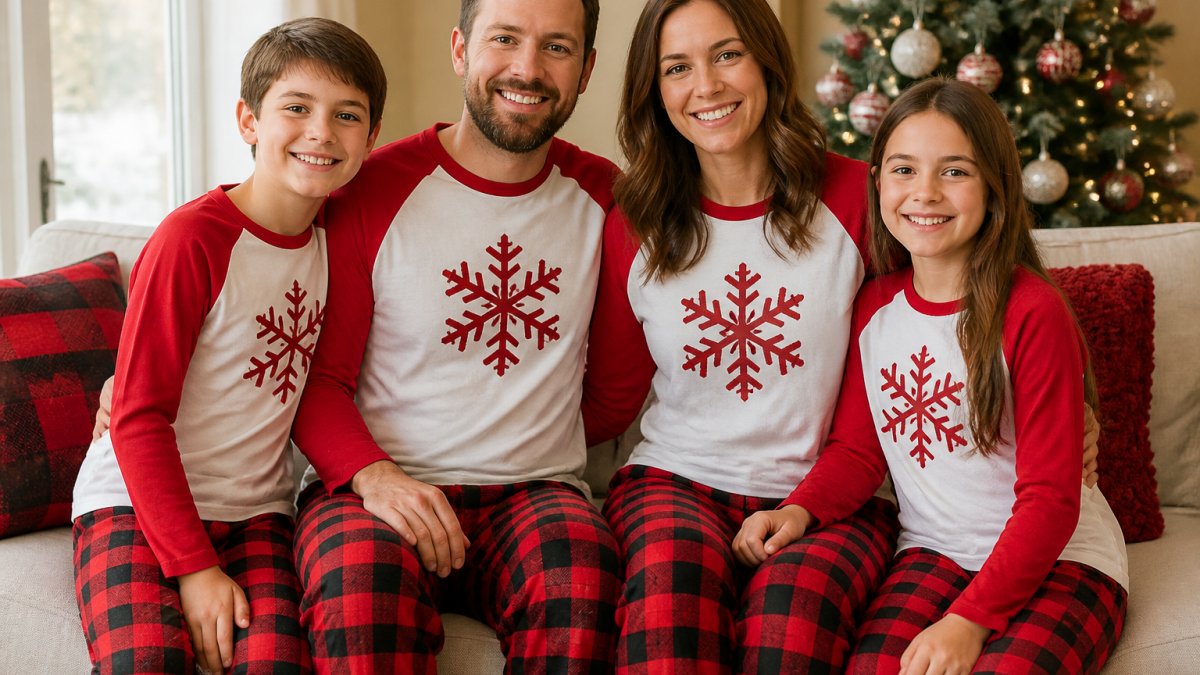
For matching family shirts, measure each person and compare the measurements to the chart individually.
For a holiday order, our guide on buying matching Christmas shirts for the family walks through sizing a whole group, and our roundup of matching Christmas outfits for families helps you plan the look.
Frequently Asked Questions
Should I measure my body or a shirt that already fits me?
You can do both. Lay a shirt you already like flat, measure the chest from armpit to armpit and double it, then compare that number to the size chart. You can also compare your body measurements to the chart.
How do I read a T-shirt size chart correctly?
Check whether the chart lists body measurements or garment measurements, because they are not the same thing. Measure yourself or a shirt you own and compare the measurements to the chart.
Do shirt sizes really vary between brands?
Sizing information can differ between products. Compare the measurements on the specific product's chart rather than relying only on a size label.
Is a shirt size calculator reliable enough to skip measuring?
A shirt size calculator can provide an estimate based on its inputs. You can also measure yourself and compare the measurements to a size chart.
Sizing a whole family online does not have to be a gamble. BaileysTeesAndMore makes it easier with detailed size charts, family-oriented designs across a full size range, and seasonal graphic tees and long-sleeve options built for group orders. Measure once, compare to the chart, and order with confidence. Get started with BaileysTeesAndMore and dress the whole family in shirts that actually fit.